Scaling Biogas in North America: Local Challenges, Global Opportunities
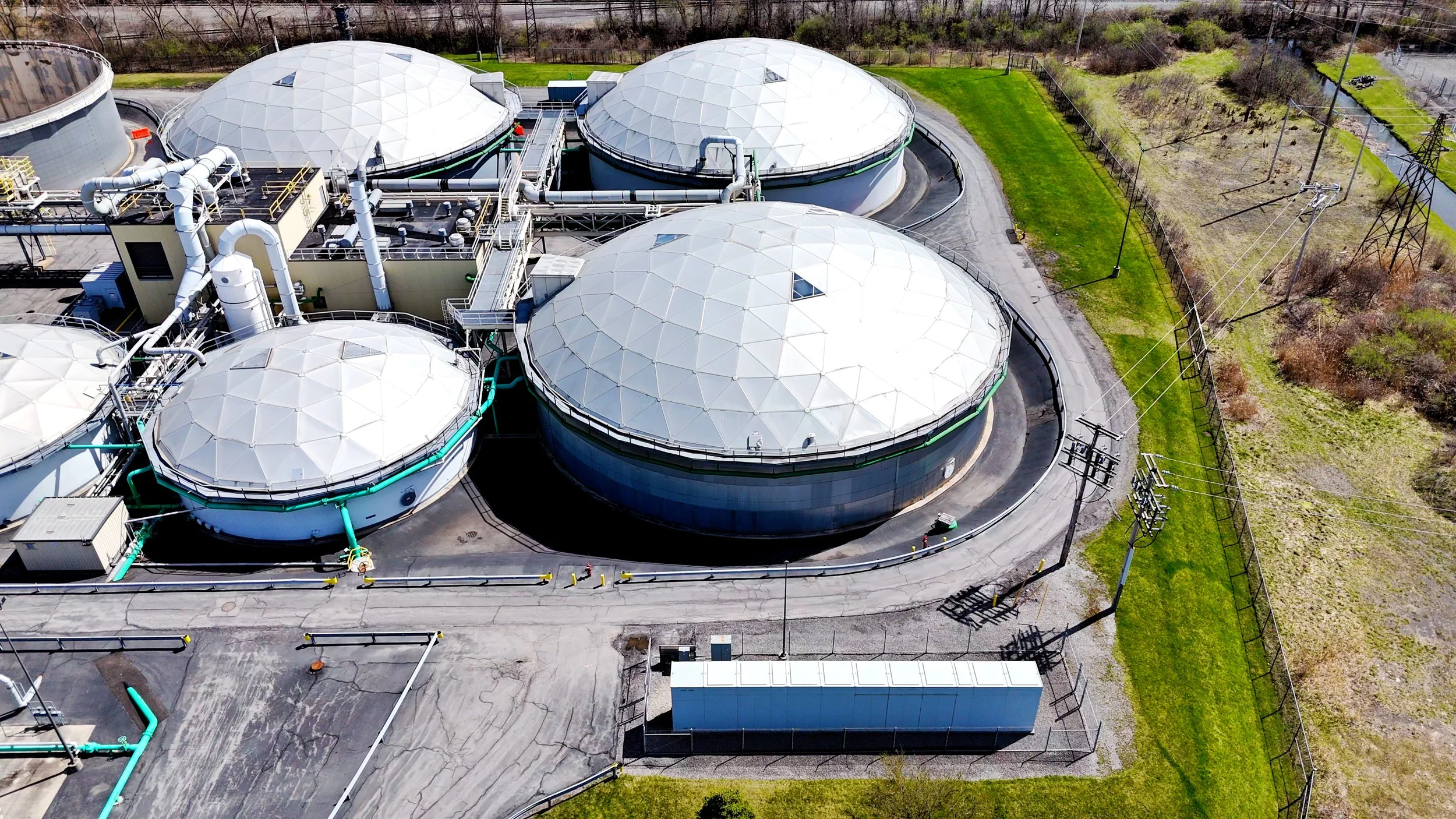
An anaerobic digestion facility in the US
By Alex Marshall
Council Member, World Biogas Association. Vice President, COGEN World Coalition.
Originally published October 22, 2025.
Across North America, biogas and biomethane are moving from niche renewable fuels toward mainstream decarbonization tools. The resources, the engineering capability, and the policy support are all in place. The market is still fragmented. The question is not whether biogas can scale. It is how to align incentives, infrastructure, and offtake markets so that it does.
Trends and growth areas
In the United States, landfill gas and municipal wastewater digestion remain the workhorses of the sector. New upgrading facilities are commissioned each year, converting methane emissions into renewable natural gas (RNG) for transport and grid injection.
Food waste and co-digestion projects are accelerating alongside them, driven by source-separated organics legislation and the need for sustainable waste management. These sites blend energy-rich feedstocks such as food waste, fats, and manure to raise gas yields and improve credit values.
Purely agricultural digestion has slowed. Lower credit prices and saturated development around large dairies have reduced returns for new entrants. Developers are turning instead to smaller, modular systems tied to food processors or municipal feedstock hubs.
Canada continues to lead on utility-scale adoption. FortisBC already blends around three percent renewable gas into its network, a working example of how a utility can bring biomethane into the mainstream.
Policy drivers and market signals
Federal and state frameworks remain the foundation of RNG economics. The U.S. Renewable Fuel Standard (RFS) continues to underpin demand for D3 Renewable Identification Number (RIN) credits, with values relatively stable through 2025. The Inflation Reduction Act extended key production tax credits, including the Section 45Z clean fuel production credit, giving investors more confidence to commit capital. Against that, the California Low Carbon Fuel Standard (LCFS) credit price has fallen sharply since 2020, which has squeezed project margins.
California Senate Bill 1440 now allows utilities to blend biomethane directly into traditional gas networks. That could widen offtake well beyond the compressed natural gas (CNG) transport market. In Canada, the Clean Fuel Regulations are driving national growth, and voluntary buyers with ESG (environmental, social, and governance) mandates are emerging as a strong secondary market for RNG with verifiable carbon intensity scores. North American RNG is also drawing interest from European and Asian voluntary markets, a reminder that carbon is a global commodity.
The region still carries a paradox. Feedstock is abundant and natural gas is cheap. Without firm carbon pricing or renewable gas mandates, RNG struggles to compete on cost alone.
What separates the projects that work
The most useful shift in mindset is to treat biogas as a waste-management practice first and an energy product second. Projects framed around waste reduction, circularity, and emissions avoidance tend to secure broader stakeholder support, and increasingly better access to public finance.
Investor sentiment is mixed. Some developers report lower returns as credit prices soften, which is prompting consolidation. The next wave of returns will depend on diversifying offtake, expanding from transport fuel into power generation, district heating, and industrial heat.
Carbon accounting consistency is the other lever. A framework that creates continuity between the fuel, waste, and industrial sectors, so that each tonne of avoided CO2 is recognized once and consistently, would build investor confidence and support cross-sector credit trading.
The barriers that remain
The largest single barrier is offtake uncertainty for environmental attributes, and it falls hardest on projects with very low carbon intensity scores, which can paradoxically earn less under existing credit mechanisms. Developers also cite price volatility in LCFS and RIN markets, state-by-state regulatory fragmentation, and the difficulty of aggregating feedstock in rural regions. Public perception around odor, trucking, and siting remains a local constraint despite the sector's environmental record.
What the sector needs next is stability: predictable long-term policy, harmonized certification, and closer alignment of renewable attribute markets across borders. If carbon accounting frameworks develop in parallel across continents, developers can hedge policy risk through international credit fungibility. That is a practical step toward normalizing market conditions.
A global view
North America's model is built on strong credit systems and private-sector innovation. It is powerful and it is incomplete. Europe offers lessons in heat integration and system optimization. Emerging markets show how feedstock efficiency and modularity drive scalability. The gain from here is less about any single market and more about connecting them. North America has the capital. The missing piece is coherence.
Questions and Answers
Is biogas ready to scale in North America?
The resources, engineering, and policy support exist. The constraint is coherence across incentives, infrastructure, and offtake markets, not underlying capacity.
What are the main sources of biogas in the United States?
Landfill gas and municipal wastewater digestion remain the largest sources, with food waste and co-digestion projects growing quickly under source-separated organics legislation.
Why has agricultural biogas development slowed?
Lower credit prices and saturated development around large dairies have reduced returns, pushing developers toward smaller modular systems tied to food processors and municipal feedstock hubs.
What is the biggest barrier to anaerobic digestion projects?
Offtake uncertainty for environmental attributes. Projects with very low carbon intensity scores can paradoxically earn less under existing credit mechanisms.
How do U.S. and Canadian biogas policies differ?
The U.S. relies on the Renewable Fuel Standard and state programs such as California's LCFS. Canada's Clean Fuel Regulations drive national growth, and Canada leads on utility-scale blending, with FortisBC blending about three percent renewable gas.
What will drive the next wave of biogas returns?
Diversifying offtake beyond transport fuel into power generation, district heating, and industrial heat, supported by more consistent carbon accounting across the fuel, waste, and industrial sectors.