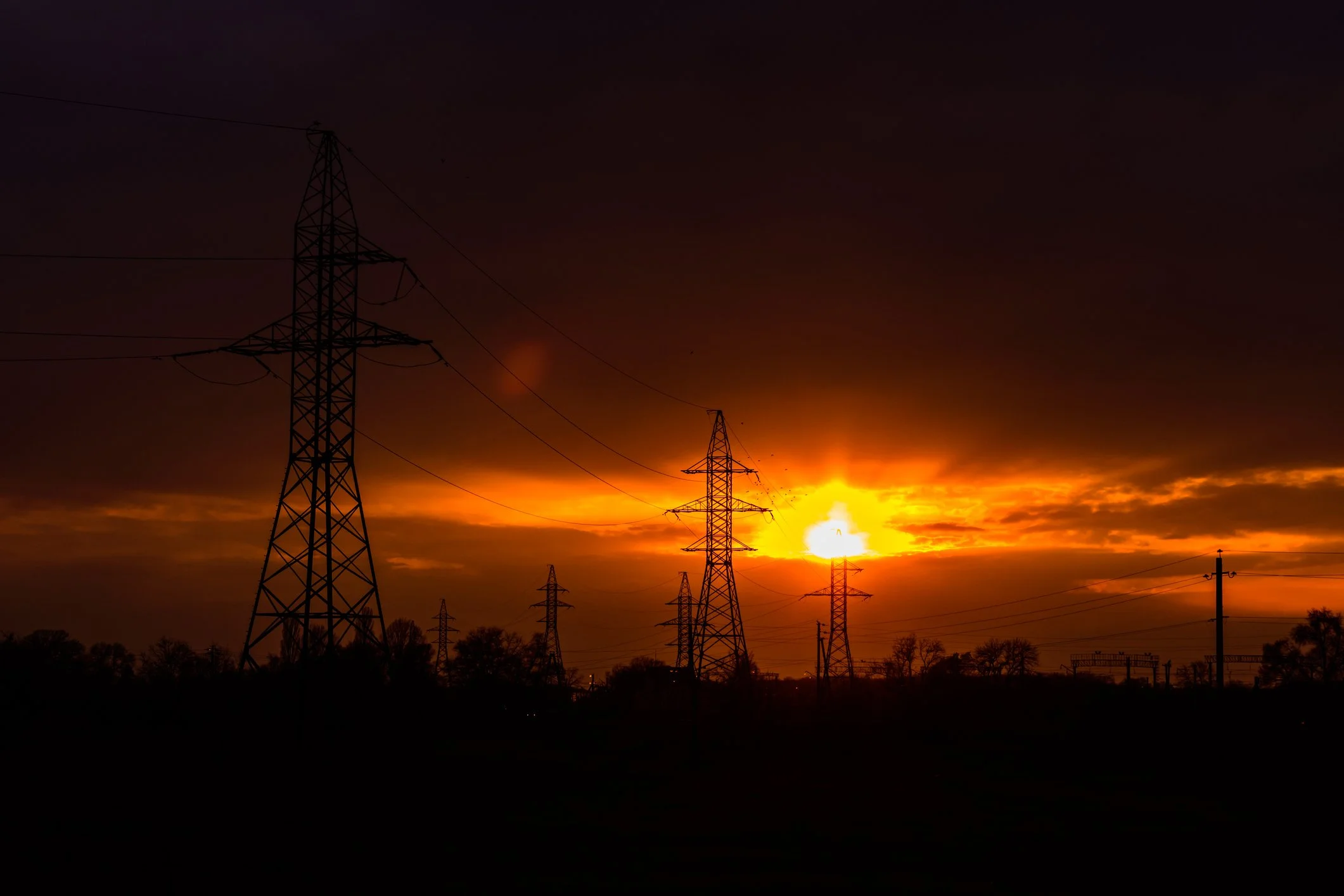
Speed to Power - Why Power Availability Is Now the Defining Constraint in AI Infrastructure
Speed to Power: The Constraint Redefining Infrastructure Strategy
For most of the past decade, data center energy strategy centered on familiar objectives: renewable procurement, efficiency targets, and long-term carbon reduction. Those priorities remain relevant. But a different constraint now sits at the center of infrastructure decision-making.
Speed to power is the ability to secure reliable electrical capacity within commercially viable timelines. As demand for artificial intelligence (AI) infrastructure has accelerated, utility interconnection queues, the waiting lists for new grid connections, have extended years into the future across North America and Europe. Connections that once took months are now commonly quoted at three to five years or more. Transmission congestion, substation limitations, transformer shortages, and permitting delays have created a widening gap between the pace of AI investment and the pace at which grid infrastructure can respond. The planning frameworks the industry relies on were not designed for this rate of change, a problem I examine in the Temporal Trilemma.
The result is that power availability has overtaken capital, land, and hardware as the primary bottleneck for AI data center deployment. This is not temporary friction. It is a structural shift in how infrastructure decisions have to be made.
Three things speed to power changes
How infrastructure is deployed. Distributed energy systems, onsite generation, hybrid microgrids, and battery storage are moving from specialist resilience tools into mainstream infrastructure strategy. The objective is no longer simply to improve resilience around an existing utility connection. Increasingly, infrastructure is deployed ahead of, or partially independent from, the grid in order to accelerate operational readiness.
How reliability is defined. High availability, the proportion of time a facility can actually deliver power to its load, is an architectural outcome, not a single equipment specification. Fuel strategy, modularity, controls integration, thermal management, and system design all contribute to long-term resilience in ways that point-in-time equipment choices cannot capture alone.
How competitive advantage is built. For much of the past decade, competitive advantage in digital infrastructure was primarily a computing and software question. It is increasingly an infrastructure question. Organizations that can secure power quickly, build resilient systems, and retain the flexibility to evolve are developing a structural edge that capital alone cannot replicate.
The demand side of speed to power
Speed to power is usually treated as a supply problem: how to generate or contract capacity faster. It is also a demand problem. Efficiency measures, higher utilization, and denser cooling architectures reduce the capacity a facility needs to secure in the first place, and they can be implemented in months rather than the years a grid connection requires. A megawatt that is not needed is a megawatt that is not waited for. I set out this argument in Efficiency Is Speed to Power.
Speed creates a long-term challenge
Infrastructure deployed rapidly under market pressure tends to remain in service for decades. Temporary systems become permanent ones. Decisions made today cannot be judged on energization timelines alone. They must also account for operational flexibility, emissions trajectory, fuel adaptability, and integration with future grid development.
The real challenge is not choosing between speed and sustainability. It is preserving optionality: building systems that perform reliably now while remaining adaptable as the energy landscape changes around them. Hybrid architectures combining grid supply, onsite generation, storage, and advanced controls are increasingly positioned to deliver both. Sequencing those decisions across the life of an asset is the problem the Structured Transition Model addresses directly.
The tension between speed, resilience, and long-term transition is the subject of Five Nines and Fast Power, a book on making better power infrastructure decisions in the age of AI.
Five Nines and Fast Power
Making better energy decisions in the age of AI
Further Reading

Frequently Asked Questions
-
Speed-to-power refers to how quickly a data center operator can access sufficient, reliable electrical capacity to bring a facility online. As AI infrastructure demand has surged, securing power within commercially viable timelines has become the primary deployment constraint, ahead of capital availability, land, and computing hardware.
-
Utility interconnection queues in North America and Europe now extend years into the future due to transmission congestion, substation capacity limits, transformer supply shortages, and permitting backlogs. These constraints were not designed to accommodate the pace of AI-driven infrastructure growth, creating a structural gap between investment timelines and grid response times.
-
Developers are increasingly deploying onsite generation, hybrid microgrids, battery energy storage systems, and combined heat and power (CHP) systems. These distributed energy approaches allow facilities to become operational faster, either independently of the grid or alongside a partial utility connection, rather than waiting for full grid interconnection.
-
It is increasingly a long-term strategic consideration. Infrastructure deployed quickly under market pressure typically remains operational for decades. This makes it essential to plan distributed energy systems with long-term factors in mind, including fuel flexibility, emissions trajectory, lifecycle economics, and the ability to integrate with future grid developments.
-
ItSpeed-to-power and sustainability are not mutually exclusive, but they create genuine tension. The most effective approach is to design systems that deliver operational reliability immediately while preserving the flexibility to transition toward lower-emission configurations as cleaner energy sources and better grid infrastructure become available.em description
-
Organizations that can secure power quickly, build resilient systems, and maintain flexibility to evolve are developing a structural advantage in the AI infrastructure race. The ability to deploy at speed without sacrificing long-term performance is becoming as strategically important as model capability or capital depth.
-
Combined heat and power, also known as cogeneration, generates electricity and recovers heat from a single fuel source simultaneously, achieving higher overall efficiency than separate generation. For data centers, CHP offers onsite generation that can be deployed independently of grid constraints, supporting speed-to-power objectives while contributing to long-term energy efficiency. Adding absorption chillers enables the conversion of heat to cooling, that can be used to offset data center cooling loads.
-
A hybrid microgrid combines multiple energy sources, typically including grid supply, onsite generation, and battery storage, managed through an integrated control system. For AI data centers, hybrid microgrids offer deployment flexibility, resilience against grid outages, and the ability to evolve the energy mix over time without replacing the entire power architecture.