Texas Turned Public Opposition Into Procedure
I spent the 12th and 13th pf August 13 the Bisnow DICE South data center conference in Arlington, Texas. Across several sessions, including the one where I spoke about “Securing Capacity in Constrained Markets” the discussion of public opposition converged on the same diagnosis. The sector has no consumer-facing voice, it has never had to explain itself, and that silence has created a vacuum. Misinformation has now filled the vacuum. In my opinion the answer is a clearer and better coordinated narrative about economic and social value.
Every part of that diagnosis is defensible but it is also about eighteen months out of date.
Ten days before that conference, on August 3, the Governor of Texas wrote to the Public Utility Commission of Texas and to the Electric Reliability Council of Texas, the body that operates the state's grid, and instructed them to carry out a comprehensive verification and audit of every data center moving through the grid connection process before any further project is allowed to advance. Any project that fails the audit is to be refused connection.
The industry spent the following week discussing how to tell its story better. The story had already stopped being the operative variable.
The distinction that matters
Public opposition to infrastructure is normally treated as sentiment. Sentiment is soft. It moves with the news cycle, it can be researched, segmented, and addressed, and a well-run engagement programme can shift it. Treating opposition as sentiment is what produces the conclusions the conference reached: better communications, earlier engagement, community advocates rather than adversaries.
What happened in Texas is different in kind. Opposition did not intensify. It changed category. It stopped being a sentiment that projects have to manage and became a procedure that projects have to pass through.
Three separate mechanisms make that concrete:
A verification gate now sits in front of the connection queue. Officials told the commission on August 14 that the audit will cover roughly 250 to 300 projects representing about 200 gigawatts of future demand. A gigawatt is a thousand megawatts, roughly the output of a large conventional power station. Two hundred gigawatts is more than twice the record peak demand the Texas grid has ever served. The grid operator has said the work will take several months. In the meantime, the classification notices that were due to go out to utilities on August 7 under the state's new large load study process did not go out.
The trigger was administrative, not political. State law already required these facilities to report their power and water use. Fewer than ten percent of them had complied. The intervention did not need a poll or a protest to justify itself, it needed a compliance table. That is a far more durable basis for regulatory action than public mood, because it does not decay.
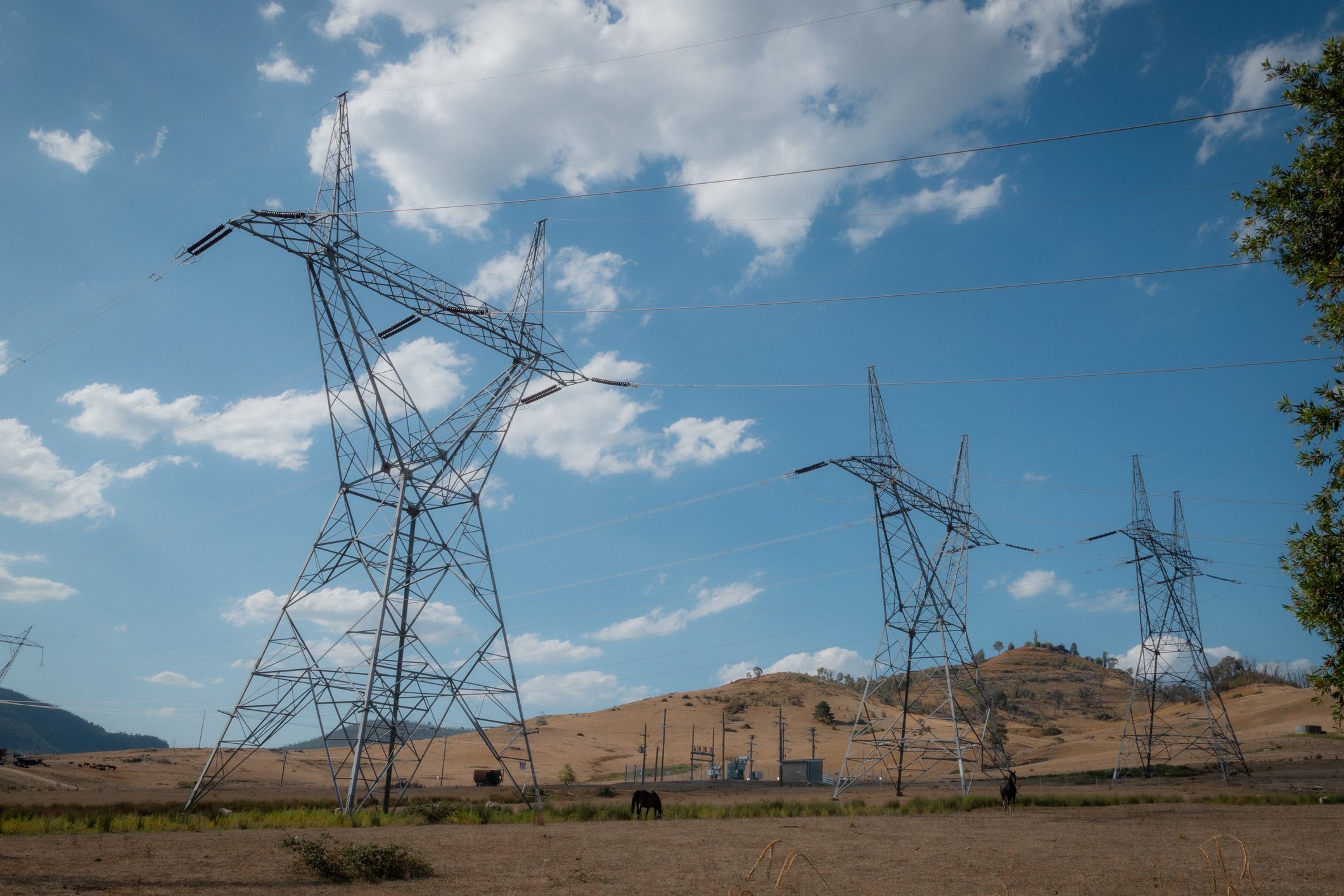
Opposition has crossed from the load to the wires. Texas is building three ultra-high-voltage import corridors into the Permian Basin, at a voltage not previously used on the state grid, on towers approaching two hundred feet with rights of way two hundred feet wide. Grid officials have testified that without them the region faces rolling blackouts as early as next summer. The demand driving the plan is largely the electrification of oil and gas operations, with regional consumption projected toward around 26 gigawatts by 2038. After a fifteen-hour hearing in late July dominated by landowner testimony, the Lieutenant Governor called on the commission to refuse the certificates the lines require until the legislature has revised the approval process.
Read that last one carefully. Lines that most of the state needs regardless of a single data center are now held up by opposition the data center sector generated. The sector did not just fail to win an argument. It contaminated a category of infrastructure it does not own and cannot influence.
The clock nobody underwrote
There are three clocks running on any large load project, and the industry has spent three years optimising two of them.
The first is the capital clock. It has been fast, patient, and abundant, and it is the one everyone measures.
The second is the plant clock. Turbines, engines, transformers, switchgear, civil works. It is slow, it is well understood, and lead times are tracked to the week.
The third is the consent clock. How long the permission to build lasts, and how long it takes to obtain. Until recently this was not modelled at all, because it did not appear to bind. Land was available, the state was welcoming, and the queue grew from 63 gigawatts at the end of 2024 to 226 gigawatts a year later and to approximately 410 gigawatts by March 2026, of which about 87 percent was data centers. Nothing in that growth curve suggested consent was scarce.
Consent is now the binding clock, and it has two properties the other two do not.
It is shorter than the asset. A permission granted under one legislature can be revised by the next. The 90th Texas Legislature convenes in January 2027, and the commission is expected to ask it for expanded statutory authority over the sector. Whatever emerges from that session will outlast the political conditions that produced this month's audit, and it will apply to assets with thirty-year lives.
It is not purchasable. Capital can be raised faster by paying more for it. Equipment can be brought forward by paying more for it. A regulatory pause cannot be shortened by paying more for it, and the parties who control it are not counterparties.
What this does to underwriting
The capital discipline theme at the conference was that investors have stopped accepting letters of intent and now want entitlements, secured power, construction plans, and tenant quality. The formulation I heard repeatedly was a preference for a modest capacity with a firm date over a very large capacity without one.
That preference is correct and it is now much harder to satisfy, because the date has changed nature. A connection date used to be an engineering variable. It was a function of queue position, study cycles, and equipment delivery, all of which can be modelled with reasonable confidence. In Texas today, the date is a function of an audit with no completion deadline, a rulemaking due to conclude in December, and a legislative session that begins in January. None of those are engineering variables.
Anyone pricing a Texas project on a schedule derived from queue mechanics is pricing the wrong distribution.
The strongest case against this reading
The serious objection is that Texas is an outlier reacting to a specific administrative failure, and that the intervention is verification rather than prohibition. The audit is measured in months, not years. The queue was always mostly speculative, given that requests now stand at roughly five times the record peak. A filter was inevitable and arguably overdue. The sector's own trade association responded to the directive by welcoming a process that separates serious investors from speculative ones, and it has a point. Filtering a queue that is four times the size of the system it wants to join is not hostility. It is housekeeping.
I accept most of that. The filter is real, it is probably necessary, and the projects that survive it will be better projects.
The objection misses what actually changed. The issue is not the pause. The issue is that the pause was created by letter, applied before a study process the regulator had approved eight weeks earlier, and given no end date. That is discretion. Discretion is fine when it runs in your favour and it has run in the sector's favour for a decade. The question a developer has to answer is not whether this particular audit is reasonable. It is what the same discretion does in January, when a legislature that has just spent an interim listening to landowners is asked to convert it into statute.
The audit is temporary. The mechanism it establishes is not.
Where this leaves the argument
The industry's working theory is that it has a communications deficit and that closing it will restore its freedom to build. I do not think that is right. Communities that opposed these projects in 2025 have, in 2026, obtained an audit gate, a legislative hearing, a threat to the certificates for the transmission network, and a session of the legislature scheduled to consider giving the regulator more authority. That is not a group that failed to be persuaded. That is a group that won.
The useful question is no longer how the sector tells its story. It is how the sector operates in a market where the permission to build is a shorter-lived asset than anything it is used to financing, and where the people who grant that permission have discovered how much leverage they hold.
That question does not have a communications answer.
Five Nines and Fast Power
Making Better Decisions in AI Energy Investments
Questions and answers
What did Texas do to data center grid connections in August 2026?
On August 3, 2026, the Governor of Texas directed the state's utility regulator and grid operator to audit every data center advancing through the grid connection process before any further project could proceed. Projects that fail the audit are to be refused connection.
Why did Texas order the audit?
The stated trigger was a compliance failure rather than a protest. State law already required these facilities to report their power and water use, and fewer than ten percent had done so. That basis is more durable than public mood, because compliance data does not decay.
How many projects are affected?
Grid operator officials told regulators on August 14 that the audit covers roughly 250 to 300 projects representing about 200 gigawatts of future demand. That is more than twice the record peak demand the Texas grid has ever served.
How long will it take?
The grid operator has said several months. The directive set no completion deadline. That is the more significant feature, because a pause without an end date cannot be scheduled around.
Are the 765 kilovolt transmission lines part of this?
The Permian Basin corridors are driven largely by the electrification of oil and gas operations, not by data centers. But opposition generated by data center growth has attached itself to those lines, and state legislators have called for the certificates they require to be refused. That is the clearest evidence that the dispute has spread beyond the projects that caused it.
Does this mean data centers cannot be built in Texas?
No. The audit is verification rather than prohibition, and the sector's own trade association welcomed a process that separates committed projects from speculative ones. With connection requests running at roughly five times record peak demand, filtering was inevitable.
So what actually changed?
The status of the permission to build. It used to be a background condition. It is now an active variable with no fixed duration, no purchase price, and no counterparty to negotiate with. A connection date in Texas is no longer an engineering output.
Is this only a Texas problem?
Texas is the clearest case because the intervention was explicit and dated. The mechanism is portable. Any jurisdiction with a reporting requirement, a discretionary regulator, and a legislature can do the same thing.