Data Centers, Resilience and Distributed Energy: Reflections Following the CHP Alliance Webinar
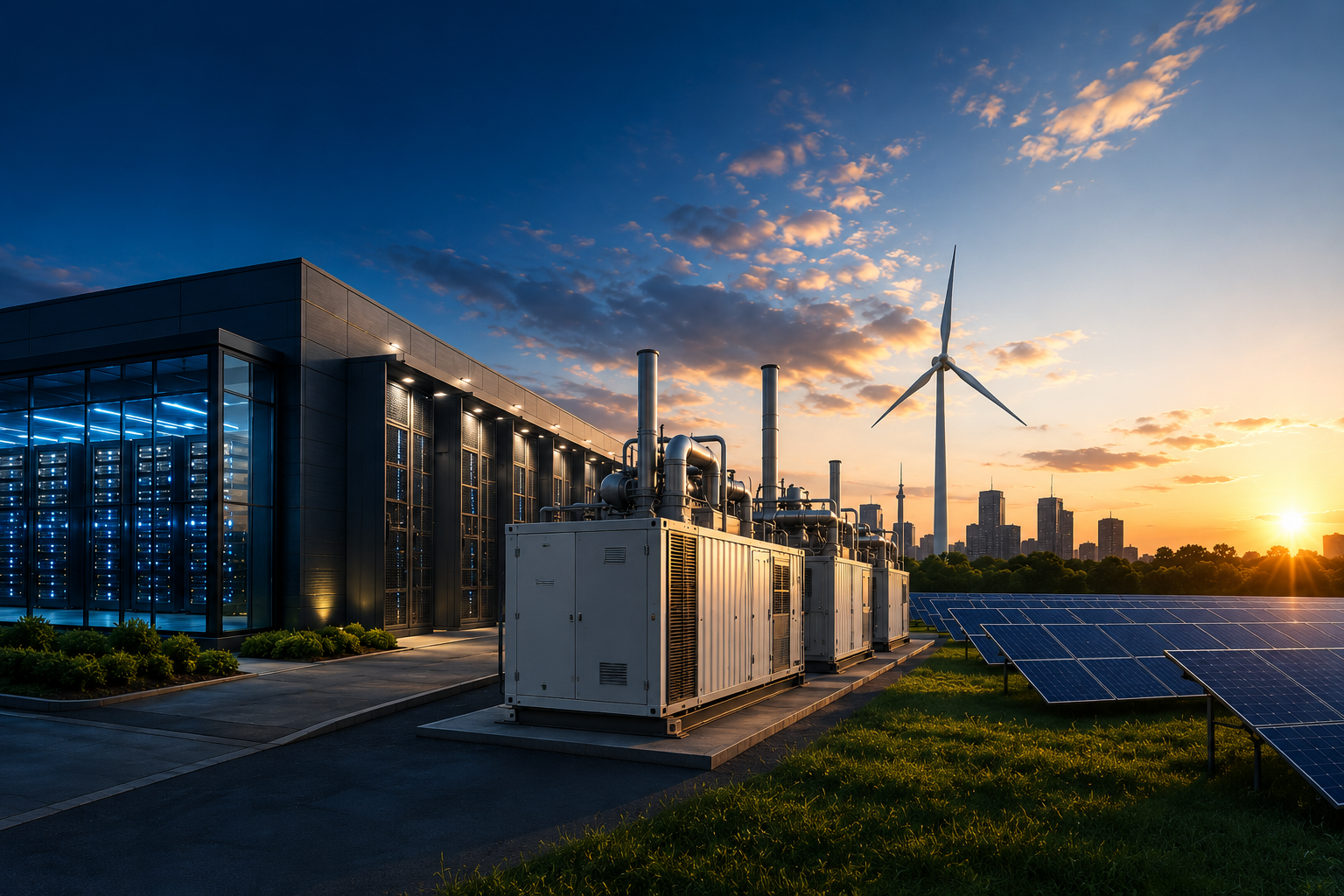
This week I had the opportunity to participate in a webinar hosted through the Combined Heat and Power Alliance discussing the evolving role of distributed energy systems within data center infrastructure.
The discussion highlighted how rapidly the relationship between power infrastructure and digital infrastructure is beginning to change.
Traditionally, most data center energy strategies have centered around two separate systems: grid-connected primary power and standby backup generation designed primarily for resilience during outages. However, as data center demand continues to grow and energy systems become increasingly complex, the industry is beginning to explore more integrated approaches to power, cooling, and operational resilience.
One of the areas I discussed during the session was the role that combined heat and power systems can play within enterprise and campus-style data center environments.
Gas engine technology is already widely deployed across industrial and commercial applications globally, delivering highly reliable onsite generation while also supporting improved overall fuel efficiency through the recovery and utilization of thermal energy. Within certain data center applications, this creates the potential to support combined cooling, heat and power configurations capable of reducing reliance on electrically driven cooling infrastructure.
As power density and cooling requirements continue to increase across digital infrastructure, the relationship between electrical efficiency and thermal management is likely to become increasingly important.
Another important theme from the discussion was resilience.
While the electrical grid remains highly reliable across many regions, there are growing signs that businesses are placing increased emphasis on operational continuity, power quality, and local energy security. Extreme weather events, aging infrastructure, and rising energy demand are all contributing to broader discussions around how critical facilities should manage long-term energy resilience.
Distributed generation systems are increasingly being evaluated not simply as emergency backup infrastructure, but as part of wider operational energy strategies.
At the same time, sustainability expectations continue to evolve.
Data center operators are under growing pressure to improve efficiency, reduce emissions, and demonstrate more responsible long-term energy strategies. This creates an important opportunity for technologies capable of simultaneously supporting resilience, efficiency, and lower carbon intensity.
Importantly, the discussion around onsite power is no longer limited to conventional natural gas applications alone.
Gas engines are capable of operating on a growing range of lower-carbon fuels including biogas, biomethane, landfill gas, and other recovered methane sources. In many cases, these systems can both reduce methane emissions to atmosphere and generate reliable onsite power from fuel sources that would otherwise be wasted.
The webinar reinforced that the future energy landscape for critical infrastructure is unlikely to rely on a single solution. Instead, it is becoming increasingly clear that hybrid approaches combining centralized grids, distributed generation, thermal integration, renewable technologies, and energy storage will play an important role in supporting future resilience and sustainability objectives.
The broader conversation around data centers and energy infrastructure is still evolving rapidly, but it is clear that power systems are becoming increasingly strategic to long-term digital infrastructure planning.
Frequently Asked Questions
What is the Combined Heat and Power Alliance and what does it do?
The Combined Heat and Power Alliance is a US-based organization that advocates for policies supporting the deployment of combined heat and power and cogeneration systems across industrial, commercial, and institutional applications. It works with policymakers, regulators, and industry to promote the efficiency, resilience, and emissions reduction benefits of distributed CHP generation, and convenes industry participants through events, research, and education programs.
How does combined heat and power work in a data center context?
In a data center context, combined heat and power systems generate electricity onsite using gas engines while simultaneously recovering the thermal energy that would otherwise be wasted. In certain configurations this creates combined cooling, heat and power arrangements where the recovered thermal energy supports absorption cooling, reducing dependence on electrically driven cooling infrastructure. As power density and cooling requirements increase across digital infrastructure, the relationship between electrical efficiency and thermal management becomes increasingly important to overall operational economics.
What is the difference between standby backup generation and distributed generation as a primary energy strategy?
Standby backup generation is designed to provide power during grid outages and typically operates only when the primary grid supply fails. Distributed generation as a primary energy strategy means onsite generation plays a continuous operational role, contributing to power supply, improving energy efficiency, and supporting resilience as part of a wider energy system rather than sitting idle as emergency infrastructure. The distinction matters because a system designed only for occasional emergency use has very different specifications, economics, and operational characteristics from one designed to run continuously as part of an integrated energy strategy.
What lower-carbon fuels can gas engines run on in addition to natural gas?
Gas engines capable of running on natural gas can in many cases also operate on biogas, biomethane, landfill gas, sewage gas, coal mine methane, and other recovered methane sources. This fuel flexibility is significant because it allows the same generation asset to reduce methane emissions that would otherwise reach the atmosphere while producing reliable onsite power from fuel sources that would otherwise be wasted. As lower-carbon gas supplies develop at commercial scale, the same engine infrastructure can transition toward lower-emission operation without requiring asset replacement.
Why are hybrid energy approaches becoming the dominant model for critical infrastructure power?
No single technology is capable of simultaneously meeting the speed, reliability, efficiency, and sustainability requirements of modern critical infrastructure. Hybrid approaches that combine centralized grid supply, distributed generation, thermal integration, renewable technologies, and energy storage allow operators to balance immediate capacity requirements against long-term performance and decarbonization objectives. Rather than optimizing for a single variable, hybrid systems are designed to perform across multiple operational conditions and to evolve as technologies mature, grid conditions change, and sustainability expectations tighten.