Power, Not Compute in 2016
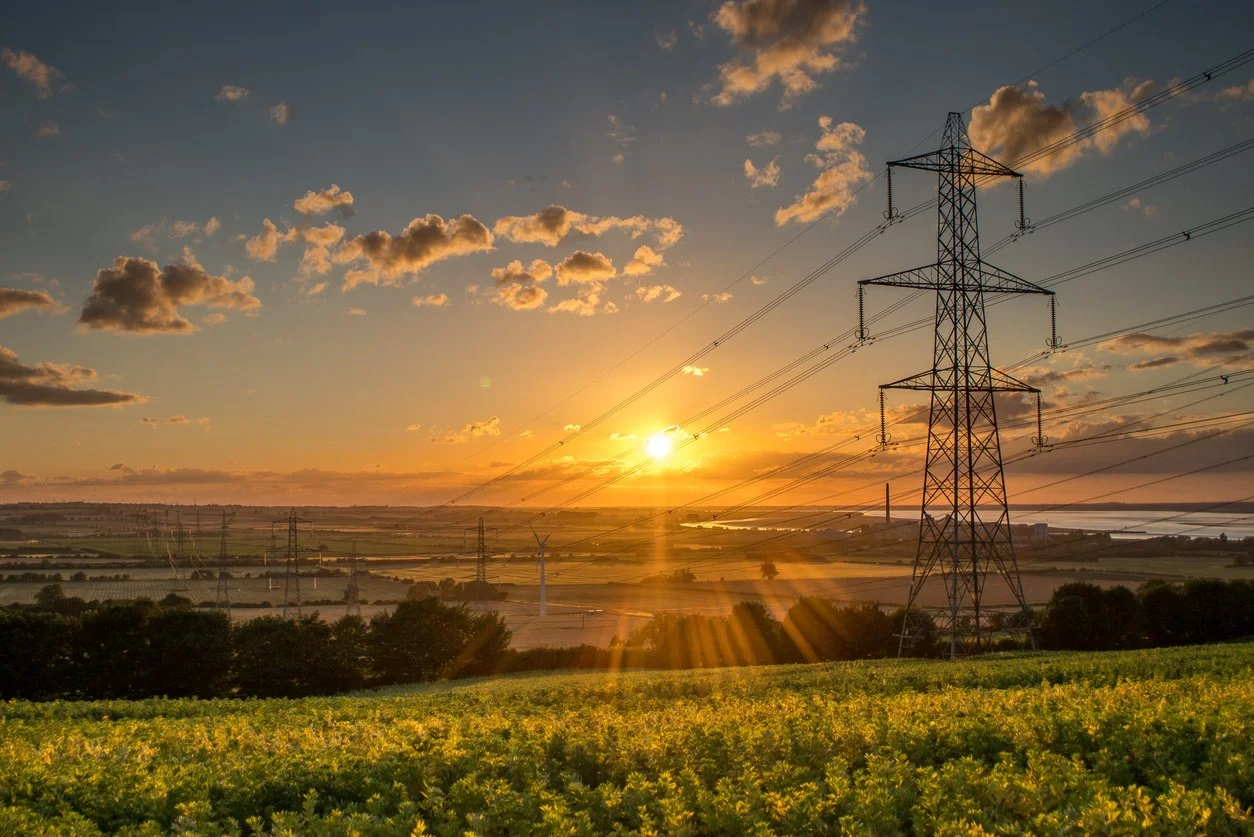
In 2016 it was predictable that power not compute was going to be the limiting factor in data center design. Grids were becoming strained with reduced centralized generation, increased intermittent power, and the demand for electricity for data centers was increasing, with the backdrop of a strained electricity grid.
Energy can account for up to 80 percent of the cost of running a data center, and at the time the United Kingdom's spare generating margin was forecast to turn negative, which meant the grid could no longer be treated as a dependable input. Once that assumption breaks, on-site generation stops being an efficiency upgrade and becomes a continuity requirement. I made that argument in Energy in Buildings and Industry, March 2016 an article also featured on Environmental Expert.
That framing sat at the edge of a debate that was mostly about cooling. The standard metric was power usage effectiveness, the ratio of total facility power to the power drawn by the computing equipment itself. The industry was optimizing the denominator. I was pointing at the numerator. The supply of power, not the efficiency of its use, was the part that would not scale on demand.
It seemed likely therefore that ultimately the limiting factor on data center growth would not be compute. It would be power. At that point the consensus was still organized around chips, algorithms, and model architecture. The argument that electricity supply would set the ceiling was not where the attention was.
It is now the whole conversation.
The International Energy Agency puts data center electricity consumption at around 415 terawatt-hours in 2024, roughly 1.5 percent of global demand, and projects it to more than double to around 945 terawatt-hours by 2030, with AI as the primary driver. By the end of the decade, data centers in the United States are projected to consume more electricity than the production of aluminum, steel, cement, and chemicals combined. The constraint is no longer theoretical, and it is no longer local. It is the defining feature of the sector's growth.
The question most operators are now asking is how to secure enough generation. That is the right question, but it is already a step behind the real one. The harder constraint is not how much power can be contracted. It is how quickly clean power can be brought online and trusted to run a facility that cannot tolerate interruption. The bottleneck is time, and specifically the time it takes to validate that a new and lower-carbon supply will hold to the reliability a data center requires.
This is the validation gap. The technologies that can decarbonize data center power largely exist. What does not exist yet, for most of them, is the operating record that proves they will deliver the reliability the load demands. Reliability in this sector is measured in what the industry calls five nines, meaning 99.999 percent uptime, which allows for roughly five minutes of unplanned downtime a year. A power source does not earn that standard by being clean, or even by being technically capable. It earns it by running long enough, under enough conditions, to be trusted. That validation time, not technology readiness, is the binding constraint on clean power for AI infrastructure.
Sequencing is therefore the actual strategic problem, and it is the problem the Structured Transition Model was built to address. The model treats decarbonization not as a single switch but as an ordered sequence, in which resilience, economics, speed to power, and emissions are resolved in a deliberate order rather than traded against each other by default. The objective is not to slow decarbonization. It is to sequence it so the validation gap is closed on purpose rather than discovered the hard way.
The strongest objection to this is that capital and urgency will compress the timelines, that enough money and demand will validate new supply faster than any historical record would suggest. There is something to this. Pressure does accelerate deployment. But validation is not only an engineering exercise. It is an operational and financial one. A facility carrying contractual penalties for downtime does not adopt an unproven supply because the technology is sound. It adopts it when the risk has been retired, and retiring that risk takes operating hours that capital cannot fully buy. Money shortens the queue. It does not remove the requirement to prove the thing works before a critical load depends on it.
I argued in 2016 that power would be the constraint, and in 2017 that it would specifically constrain digital development rather than be constrained by it. Both held. The next phase of the argument is about time. The supply exists. The proof that it can be trusted does not, yet. Whoever sequences that proof correctly will set the pace for everyone else.
This argument is developed in full in the book Five Nines and Fast Power.
Questions and Answers
What is the binding constraint on data center growth? The binding constraint is power supply, not processing capacity or cooling efficiency. Energy can account for up to 80 percent of the cost of running a data center, and grid capacity in major markets is no longer a dependable input. Once the grid cannot be relied on, securing and validating sufficient power becomes the limiting factor on how fast facilities can be built and operated.
Why is power, not compute, the limit on AI infrastructure? AI workloads can be designed and chips can be manufactured faster than the electricity to run them can be brought online and trusted. Compute scales with investment and engineering. Power scales with generation capacity, grid interconnection, and the time it takes to prove a new supply is reliable. The slower of those two sets the ceiling, and it is power.
How much electricity will data centers consume by 2030? The International Energy Agency estimates data center electricity consumption at around 415 terawatt-hours in 2024, about 1.5 percent of global demand, rising to around 945 terawatt-hours by 2030, with AI as the primary driver. In the United States, data centers are projected to consume more electricity than the production of aluminum, steel, cement, and chemicals combined by the end of the decade.
What is the validation gap in clean data center power? The validation gap is the distance between a clean power technology being technically available and being proven reliable enough to run a facility that cannot tolerate interruption. Most decarbonization technologies for data centers already exist. What they lack is the operating record that proves they will hold to required reliability. The binding constraint is validation time, not technology readiness.
What does five nines reliability mean for data center power? Five nines means 99.999 percent uptime, which allows for roughly five minutes of unplanned downtime a year. It is the reliability standard critical data center loads are held to. A power source earns it not by being clean or technically capable but by running long enough, under enough conditions, to be trusted. This is why validation time, not technology, governs clean power adoption.
What is the Structured Transition Model? The Structured Transition Model is a sequencing framework for data center power decarbonization. Rather than treating the shift to clean power as a single switch, it resolves resilience, economics, speed to power, and emissions in a deliberate order. The objective is not to slow decarbonization but to sequence it so reliability is preserved and the validation gap is closed on purpose.