Resilience Beyond the Grid: Lessons from Remote Infrastructure Systems
What Remote Infrastructure Teaches Us About Resilience
For much of the past two decades, large parts of the developed world operated under a relatively simple assumption: the electrical grid would always be there when needed. Backup generators existed primarily for emergencies. Distributed generation was viewed as a specialist solution reserved for hospitals, mining operations, islands, or regions where central infrastructure remained underdeveloped. Reliability was largely assumed to be a centralized service delivered by the utility network.
In other parts of the world, the reality was already very different.
Across remote industrial operations in Australia, developing infrastructure markets in Africa, and emerging energy systems in regions such as Papua New Guinea, resilience was not theoretical, it is operational. Power systems have to be engineered around the understanding that transmission infrastructure could be severely challenged, environmental conditions harsh, logistics complex, and uninterrupted uptime economically critical. In these environments, distributed generation was not viewed as an alternative to the grid. In many cases, it was the infrastructure.
That distinction feels increasingly relevant today.
Resilience as a systems problem
One of the most valuable lessons from working with distributed power systems in remote and developing markets is that resilience quickly becomes a systems-level engineering problem rather than simply a generation problem. The question is not merely how to produce electricity. It is how to maintain stable operations despite constrained infrastructure, fuel supply complexity, environmental extremes, maintenance challenges, and the very real commercial cost of downtime.
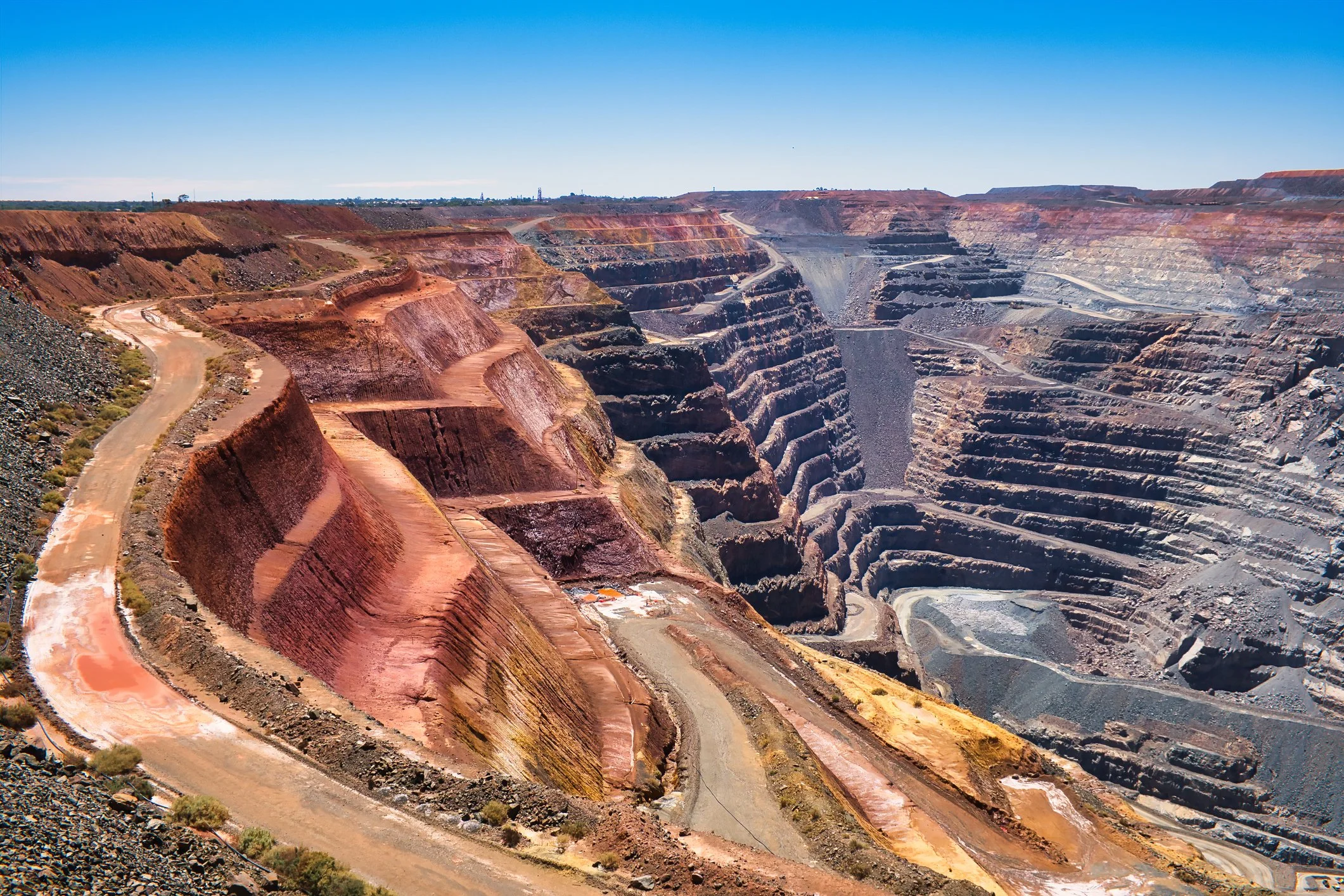
Mining operations in remote parts of Australia demonstrate this clearly. These operations rely on modular onsite generation systems capable of running continuously in demanding conditions, often far from major transmission infrastructure. Reliability, maintainability, operational flexibility, and fuel logistics became central design considerations because operational interruption carried significant commercial consequences. Consequences that cannot be deferred while waiting for grid reinforcement that might be years away. There also may be local sustainability drives, to incorporate solar, storage and other technologies, however with the heavy loading rates of mines and the intermittency of wind and solar, coupled with a non-existent grid, there is a technical requirement for some form of local thermal generation.
In parts of Africa, distributed power systems frequently evolve not from sustainability ambitions but from operational necessity. Grid instability, constrained transmission networks, and rapidly growing energy demand mean businesses and industries need to create their own resilience layers. Energy systems were designed with a pragmatic focus on uptime, adaptability, modularity, and long-term operational flexibility, not because it was the preferred approach, but because it was the only approach that worked.
Those observations increasingly resemble the discussions now taking place around AI infrastructure and data center power.
A familiar set of problems in unfamiliar markets
What is striking today is how many of the themes previously associated with remote or weak-grid markets are now emerging in advanced digital infrastructure economies. AI data centers are confronting long utility interconnection timelines, transmission congestion, reserve margin pressure, increasing weather-related disruption, and growing uncertainty around power availability itself. The industry conversation has shifted rapidly from backup power toward securing operational power capacity in the first place.
That is a profoundly important transition. Increasingly, large-scale digital infrastructure is beginning to adopt characteristics that remote industrial infrastructure has managed for years. Localized generation, modular deployment, hybrid energy systems, resilience layering, and staged infrastructure evolution are all becoming part of mainstream planning conversations. In many ways, parts of the data center sector are rediscovering distributed energy principles that have existed in industrial and remote-power applications for decades.
The decentralization of reliability
One of the broader lessons from distributed infrastructure markets is that resilience becomes decentralized when centralized systems cannot evolve quickly enough to support operational requirements. Historically, utilities largely owned reliability. Businesses consumed electricity, while backup systems existed primarily as insurance policies against the rare occasion when that reliability failed.
That boundary is beginning to blur. Hyperscale developers, industrial operators, and critical infrastructure providers are increasingly designing their own resilience ecosystems, combining onsite generation, battery storage, microgrids, hybrid controls, thermal integration, and future fuel flexibility. This is not a rejection of the grid. In most cases it is a recognition that future resilience may require layered infrastructure approaches, where the grid is one important component rather than the sole source of operational certainty.
This is particularly relevant in AI infrastructure, where the economic consequences of downtime, deployment delay, or constrained capacity can be significant enough to shape investment decisions, competitive positioning, and market development trajectories.
Transition as an infrastructure problem, not just a fuel problem
One challenge that frequently emerges in energy discussions is the tendency to frame transition purely through fuel choices or emissions metrics. Yet many remote and distributed systems evolved historically around something more immediate: operational continuity. The future energy transition may ultimately succeed not through perfect infrastructure appearing fully formed, but through systems capable of evolving over time while maintaining reliability throughout.
That is why concepts such as modular hybridization, staged decarbonization, fuel flexibility, and lifecycle infrastructure planning are becoming increasingly important. Infrastructure systems are rarely replaced overnight. More often they evolve incrementally around operational realities, adding capacity, integrating new technologies, retiring older assets, and adapting to changing constraints over the life of the asset. That principle was visible in remote industrial markets long before AI data centers began confronting modern power constraints.
What this means now
The current focus on AI infrastructure, speed-to-power, and resilient onsite generation may feel new to many parts of the market. The underlying infrastructure principles are not. In remote industrial operations, developing infrastructure markets, and distributed power systems around the world, resilience has long been engineered locally rather than assumed centrally.
What is changing is that these realities are becoming relevant to mainstream digital infrastructure at a scale and speed the industry has not previously encountered. The conversation around resilience is no longer about backup systems at the margins. It is becoming a broader discussion about how critical infrastructure is designed, deployed, operated, and evolved in a world where reliability, scalability, and decarbonization must increasingly be solved together rather than in sequence.
That is not a new problem. But it is arriving in a new place.
Five Nines and Fast Power
Making Better Decisions in AI Investments
Frequently Asked Questions
What does remote industrial infrastructure have to do with AI data centers?
More than most people in the data center industry currently recognize. Remote mining operations, distributed power systems in Africa, and off-grid infrastructure in regions like Papua New Guinea have been solving the same core problems for decades: how to maintain reliable power when central grid infrastructure is constrained, slow to expand, or simply unavailable. Those solutions are now becoming directly relevant to mainstream digital infrastructure.
Why is resilience described as a systems problem rather than a generation problem?
Generating electricity is only one part of the challenge. In remote and distributed environments, resilience depends on how the entire system is designed: fuel logistics, modular deployment, maintenance philosophy, thermal management, operational flexibility, and the ability to continue running despite constrained external infrastructure. That systems-level thinking is now what AI data center developers need to apply to their own power strategies.
What is driving data centers toward distributed energy approaches?
The same forces that drove remote industrial operators toward distributed generation: long interconnection timelines, transmission congestion, constrained grid capacity, and the commercial cost of downtime. As utility infrastructure struggles to keep pace with AI-driven demand, large-scale digital infrastructure is increasingly adopting localized generation, hybrid energy systems, and resilience layering that remote industrial markets have used for years.
Does moving toward onsite generation mean abandoning the grid?
No. The shift is better understood as a recognition that future resilience requires layered infrastructure. The grid remains an important component, but it is no longer treated as the sole source of operational certainty. Hyperscale developers and critical infrastructure operators are increasingly combining onsite generation, battery storage, microgrids, and hybrid controls to create resilience ecosystems where the grid is one layer among several.
Why do early infrastructure decisions have such long-term consequences?
Infrastructure systems are rarely replaced overnight. They evolve incrementally around operational realities, adding capacity, integrating new technologies, and adapting to changing constraints over the life of the asset. Decisions made during early deployment phases define the long-term flexibility, emissions trajectory, and resilience characteristics of the facility. Getting those foundations right matters far more than it might appear in the urgency of initial deployment.
What is staged decarbonization and why does it matter?
Staged decarbonization refers to designing infrastructure systems that can transition toward lower-emission configurations over time, rather than requiring a complete rebuild to achieve sustainability goals. It recognizes that energy transition succeeds not through perfect infrastructure appearing fully formed, but through systems capable of evolving while maintaining reliability throughout. That principle has been visible in remote and distributed power markets long before it became a mainstream data center conversation.
What is the broader lesson from distributed infrastructure markets?
When centralized systems cannot evolve quickly enough to meet operational requirements, resilience becomes decentralized. Businesses and industries that cannot wait for grid reinforcement build their own reliability layers. That is what is now beginning to happen across AI infrastructure at a scale and speed the industry has not previously encountered. The underlying principles are not new. The context in which they are being applied is.