Speed to Power Is Being Bought as Temporary and Built as Permanent
With Dean Perrine, Ryan Baumann and Kristian Weatherly-Kaye
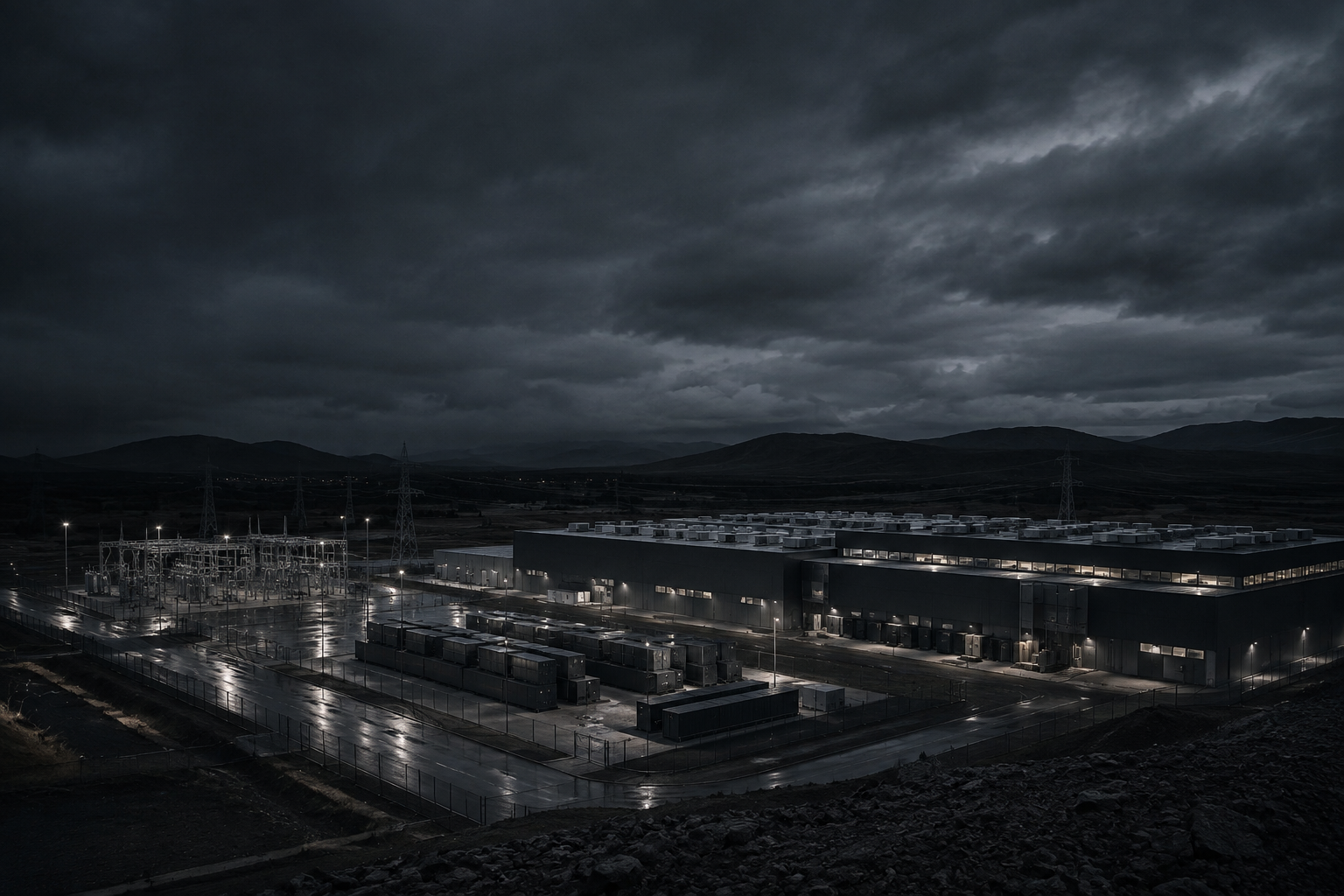
I joined a panel discussion facilitated by Rehlko in April on what is changing in data center power. The framing of the conversation was the AI power crisis. My argument was that the crisis is not the shortage itself. It is what the industry is assuming about how the shortage ends.
The mechanics are well understood by now. Racks are drawing more power and drawing it unevenly, with sharp swings between low and peak demand rather than a steady base load. Transmission capacity takes years to build. So developers install generation on site to cover the interval, and the industry has settled on a phrase for this “speed to power”.
What sits underneath that phrase is an assumption that the interval ends. Power arrives fast now, the grid connection follows later, and the onsite assets either come out or revert to standby. Procurement decisions are being made against that expectation, which means they are being made against a return date that nobody has actually underwritten.
I do not think the interval ends on the schedule the sector is pricing.
Grid constraint is not a queue that clears. It is the product of several conditions arriving together. Transmission networks were already strained before AI load appeared. Generation is becoming more intermittent as solar and wind take a larger share, which means output varies with weather rather than with demand. Consumption is rising independently through the electrification of transport and heating. Data centers arrive on top of all of that. Each of these conditions has its own timeline, and none of them resolves quickly.
If that is right, the assets being installed as an interim measure are becoming the primary power architecture. They are being selected as though they were not.
The distinction matters commercially rather than philosophically. An asset chosen for a three-year bridge is chosen on availability and installed cost. An asset chosen for a fifteen-year operating life is chosen on adaptability, fuel optionality, thermal integration and, above all, on whether anyone will still be maintaining it in year twelve. Those are different purchases. A gas engine can recover heat and convert it into cooling, which reduces the electrical load of the facility itself. It can accept blended fuels as they become available. It can accommodate carbon capture later. None of that happens by accident. It happens because someone specified for it at the outset.
This is where I would put the strongest version of the argument. Resilience is not a product attribute. It is the condition of the lights still being on in fifteen years, which depends less on what was installed than on whether the organization that installed it is still there, still trained, and still holding parts. A great many companies have entered this market in the last two years. Most will not be servicing anything in 2040.
The question I would put to anyone specifying power today is not how quickly it can be delivered. It is what operating life is actually being underwritten, and whether the asset has any path forward from the day it is switched on.
Link to the recording is available here.
Related Links
Questions and Answers
What is speed to power in data center development?
Speed to power describes how quickly electrical capacity can be made available to a site, as distinct from how much capacity is available in total. It became a governing constraint because grid connection timelines are measured in years while data center construction and commissioning are measured in months. Onsite generation is the usual response, since it can be installed on the construction timeline rather than the transmission timeline.
Why are data centers installing their own power generation?
Because the grid cannot deliver capacity on the schedule the buildings require. The constraint is not generation capacity in aggregate. It is the time needed to build transmission and complete interconnection. Onsite generation removes the dependency, allowing a facility to begin operating and earning revenue before a grid connection exists.
Is onsite generation at data centers temporary or permanent?
Most of it is being procured as though it were temporary and is likely to operate as though it were permanent. The assumption behind interim procurement is that grid capacity arrives within a few years and the onsite assets revert to standby. That assumption depends on transmission constraint clearing quickly, which it shows no sign of doing. The practical consequence is an asset base selected on short-term criteria and operated on long-term ones.
What makes a power asset adaptable?
Adaptability means the asset can change role, fuel or configuration without being replaced. For reciprocating gas engines this includes recovering exhaust heat and converting it into cooling through absorption chillers (combined cooling heat and power), accepting blended or alternative fuels as they become available, operating in support of the grid rather than only in support of the facility, and accommodating post-combustion carbon capture at a later date. These options are largely determined at specification, not retrofitted cheaply afterward.
Why is grid constraint not resolving quickly?
Several conditions are arriving at once. Transmission networks were already constrained before AI demand appeared. Generation is becoming more intermittent as solar and wind take a larger share of supply. Electricity demand is rising independently through electrification of transport and heating. Data center load arrives on top of all of this. Each condition has its own timeline and none of them is short.
What does resilience mean for data center power?
Resilience is the ability to keep operating over the full life of the facility, which is a maintenance and organizational question as much as an equipment one. Equipment quality determines whether an asset can run. Service capability, trained personnel, parts availability and the continued existence of the supplier determine whether it still runs in year twelve. A large number of companies have entered this market recently and few will be supporting installed assets in fifteen years.
Can onsite data center generation support the grid?
Yes, and in some markets it is required. Ireland has attached grid support obligations to certain gas fueled generation serving data centers. Because AI load is highly variable, onsite assets are underutilized much of the time, and that spare capability can be made available to the wider system. This turns a cost center into a potential revenue source and changes how the facility is perceived locally.