What the Reference Project Would Do Differently
Flexibility has a price. The design question is which options to buy on day one?
Speaking with Tam Pledger and Adrien Matei
I recently joined Tam Pledger of DCD and Adrian Matei for a session on onsite generation for data centers, recorded for DCD’s Energy and Power Week 2026. The brief was the Structured Transition Model, with the Racari energy hub in Romania as a worked example. The most useful moment was not an explanation of the model. It was Adrian’s answer when he was asked what he would do differently.
The project
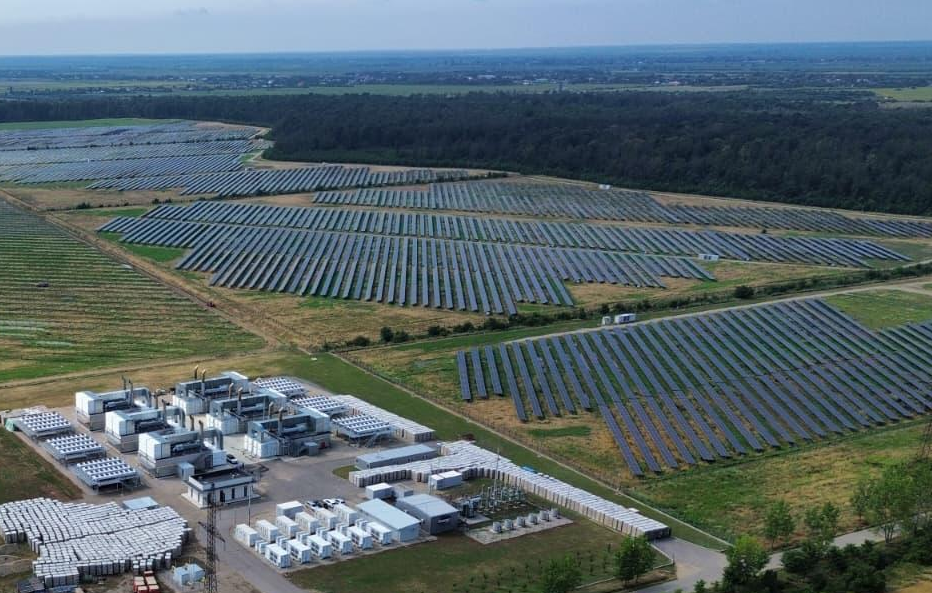
Racari, developed by Navios Investments near Bucharest, began in 2021 as a plan for 40 megawatts (MW) of gas engines plus back up diesel generation. It is now a hybrid site. The gas engines operate with 12 megawatt hours (MWh) of batteries that provide ancillary services, the grid support services that keep frequency and voltage stable. A further 200 MWh of batteries is charged by onsite solar and trades on the difference between low-price and peak-price hours. The site is grid connected. A two-year build became a five-year program.
What changed it
None of that was in the 2021 plan. When the project started, battery storage was not a commercial proposition in Romania. By the summer of 2023 the market had moved, and buying power cheaply and selling it at peak had become a revenue stream. The team also explored hydrogen and concluded the technology was too early for the Romanian market, so the land set aside for it went to another use.
Adrian was candid about the result. The design went through four iterations. Because construction ran in phases, one site finished as the next began, which stretched the delivery teams. His advice to an investor starting today was to keep an open mind, but to build once where possible and leave space to expand.
That is the strongest argument against a phased approach, and it comes from the people who delivered the reference project. I think it is right. It does not defeat the case for phasing. It changes the question.
The better question
The debate is usually framed as phased against build-once. The question developers should be asking is which options to pay for on day one and which to leave open.
Some options are cheap at installation and expensive or impossible later. Physical space is the obvious one. The control system is another. A microgrid controller, the system that coordinates generation, storage, and load on a site, has to be specified for the assets the site is likely to have in ten years, not only the ones it has at commissioning. If the controller cannot integrate a new battery system or a different fuel, the option is closed regardless of how much space was left. Fuel readiness is a third. “Hydrogen-ready” and “RNG-ready” (renewable natural gas, meaning biogas upgraded to pipeline quality) mean different things to different suppliers. The useful questions are specific: which blend percentage, how much derate (loss of rated output), and what effect on how quickly the units can follow changes in load.
Other options are better deferred. The assets themselves belong here: batteries, solar, carbon capture, alternative fuels. Their costs and revenue models change faster than a design cycle. Racari shows this. A battery decision fixed in 2021 would have been the wrong decision by 2023.
So Adrian’s lesson and the model are not in conflict. Four design iterations is the cost of deferring the assets without first securing the structural options. Fix the structure once. Phase the assets.
Designing for a load nobody knows
A second point from the session deserves more attention. Developers are asked to size power for a facility whose operating profile they do not yet know. I have seen this before in waste-to-energy, where plants are designed for a waste stream using a composition analysis taken before that stream exists. The designer works from a best estimate and builds in tolerance.
AI workloads make the problem harder. A large facility can see load changes of several megawatts within fractions of a second. Gas engines, like other rotating equipment, cannot respond that quickly, so the changes have to be absorbed elsewhere: by battery storage at the generation side, or by ultracapacitors at or near the server racks. On most of the data center designs I am seeing, engines paired with a battery system handle it. The real decision is where in the system the uncertainty gets absorbed, and that decision belongs at the start.
The model runs in both directions
The last point I made in the session is the one I would underline. The Structured Transition Model is sequenced, but it is not one-way. Racari’s hydrogen phase was explored and set aside. Policy also moves backward, and the emphasis on emissions has weakened in several markets over the past year. An asset designed to move forward to biomethane, hydrogen blends, or carbon capture should also be able to return to natural gas when prices or policy change, and move forward again later.
That reversibility is what protects an asset with a 15 to 20 year life from becoming stranded. A site locked into one fuel, one control architecture, or one revenue model is exposed whichever way policy moves. A site built to move in both directions keeps its value in either case.
Developers ask how quickly they can get power. The question to add at site selection is what that power system will need to change over its life, and whether the design allows it.
Watch the full session on DCD. I will cover Racari in more detail in a forthcoming Perspectives piece.
Questions and answers
What is onsite generation for data centers?
Onsite generation means producing electricity at or next to the data center rather than relying only on the grid. It can use gas engines, turbines, or fuel cells, often combined with battery storage and solar. It differs from backup generators, which are designed to run only in emergencies. Onsite generation runs continuously.
Why are data center developers turning to onsite generation?
Developers typically need power within 12 to 24 months. In many markets the grid cannot deliver a new connection for five to seven years. Onsite generation closes that gap. The difficulty is that the equipment lasts 15 to 20 years, so a short-term fix becomes a long-term asset that has to stay useful after the grid arrives.
What is the Structured Transition Model?
The Structured Transition Model is a technology-agnostic framework for sequencing power infrastructure over a multi-decade asset life. A site starts with reliable onsite generation to meet speed-to-power needs, then adds heat recovery, battery storage, onsite renewables, grid support, carbon capture, and lower-carbon fuels as each becomes viable. The design keeps those later steps possible from the start.
Should a data center build its power system in phases or all at once?
Neither, as a blanket rule. The better approach is to fix the structural decisions once and phase the assets. Space, the control system, and fuel specifications are cheap to get right at installation and expensive to change later. Batteries, solar, and alternative fuels are better added when their economics are proven.
What power decisions should a data center make on day one?
Three decisions matter most. Reserve physical space for equipment you may add later. Choose a microgrid controller, the system that coordinates generation, storage, and load, that can integrate new assets. Confirm what fuel flexibility the generating equipment actually has, tested against specific blend percentages rather than general claims.
What does “hydrogen-ready” or “RNG-ready” mean?
It means different things to different suppliers. RNG is renewable natural gas, which is biogas upgraded to pipeline quality. The questions to ask are which blend percentage the equipment accepts, how much rated output it loses at that blend, and whether the blend affects how quickly the equipment can respond to changes in load.
How do onsite power systems handle sudden AI load changes?
AI workloads can change a facility’s load by several megawatts in fractions of a second. Engines and other rotating equipment cannot respond that fast. The swings are absorbed by battery storage at the generation side, or by ultracapacitors at or near the server racks. Many current designs pair engines with battery storage.
How can onsite power avoid becoming a stranded asset?
A stranded asset is one that loses its value before the end of its working life. Onsite power avoids this when it can change direction: support the grid once a connection arrives, move to lower-carbon fuels, or return to natural gas if prices or policy shift. Assets locked into one fuel or one control system carry the most risk.